HERITAGE · CULTURE · FLAVOURS
Your Guide to Singapore’s Chinatown
A neighbourhood where history, faith and food meet in every corner.
Chinatown is one of Singapore’s most culturally rich districts. It began as the home of early Chinese immigrants who arrived by sea and started a new life here. Today, it remains a unique blend of tradition and progress, where temples stand beside modern skylines, and street food stalls sit next to boutique cafes.
Thian Hock Keng Temple – Oldest Hokkien Temple in Singapore
Built in 1840, Thian Hock Keng Temple is one of Singapore’s oldest Hokkien temples and a masterpiece of southern Chinese architecture. Not a single nail was used in its original construction, every joint was crafted using traditional techniques.
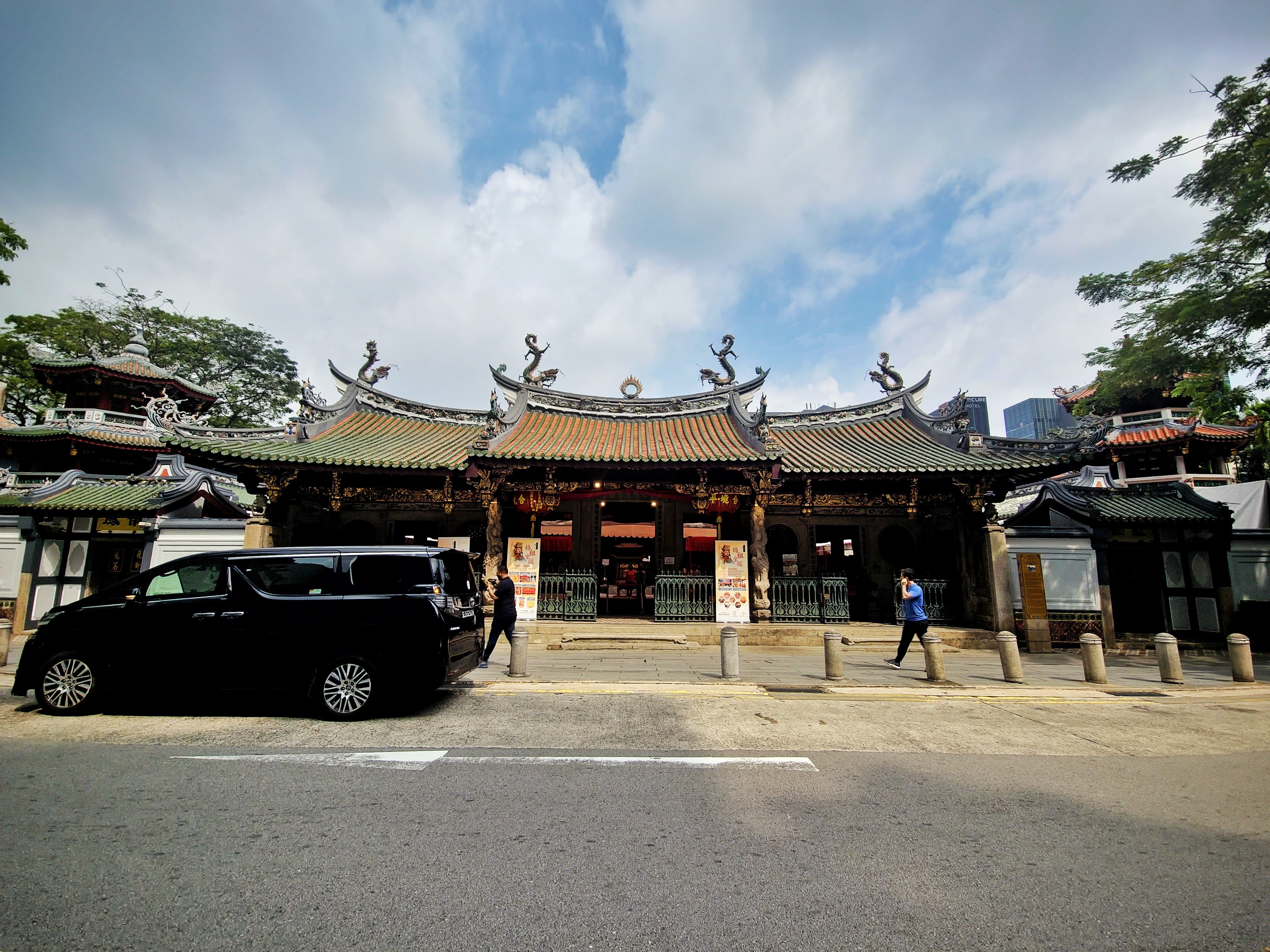
Who is Mazu?
The main deity here is Mazu, the Goddess of the Sea. Early immigrants believed she protected them during their dangerous journey across the ocean.
Sri Mariamman Temple – Singapore’s Oldest Hindu Temple
Founded in 1827, this is the oldest Hindu temple in Singapore. Its iconic gopuram (entrance tower) is decorated with vividly coloured sculptures representing deities, guardians and myths from Hindu epics.
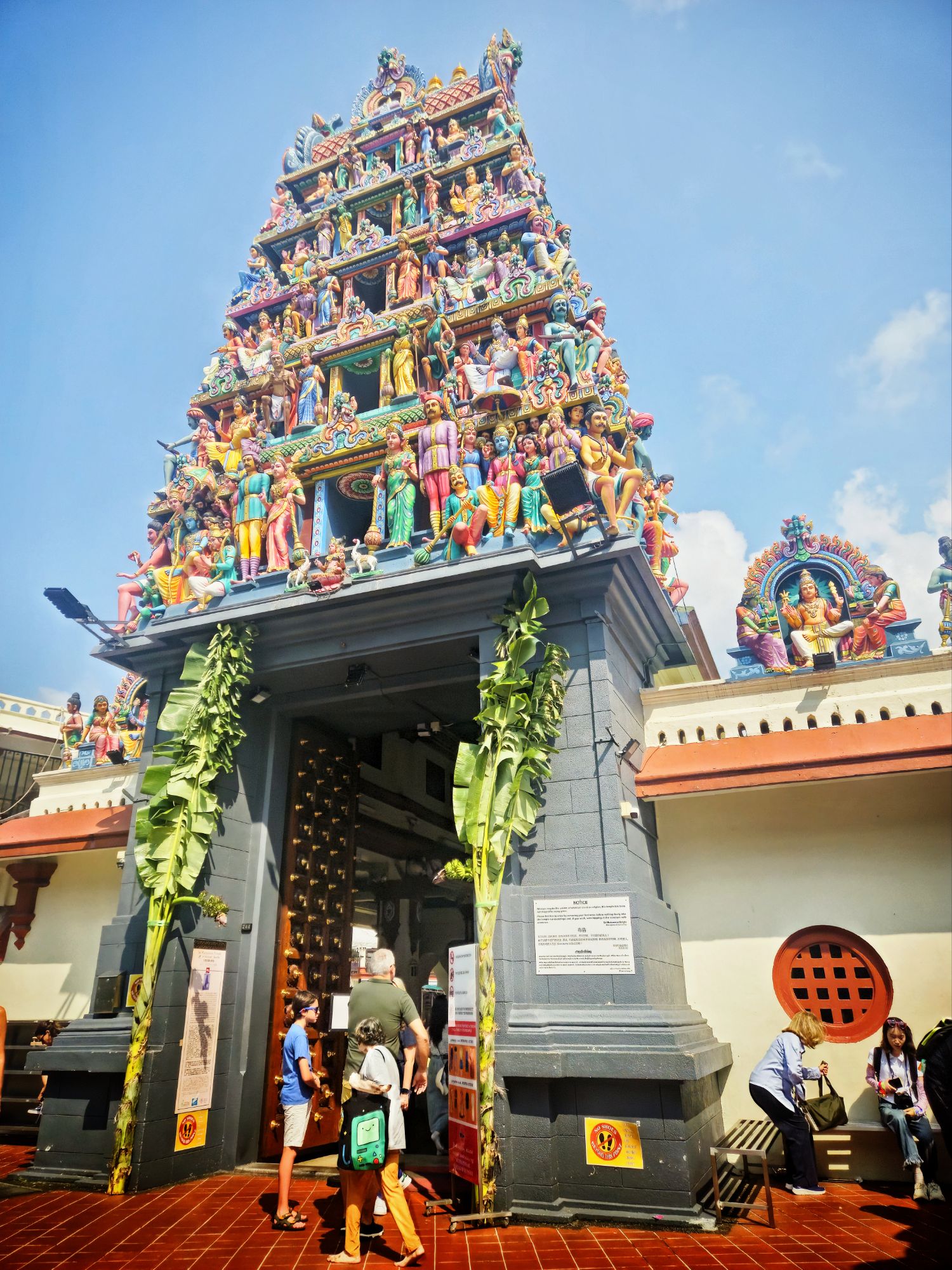
Festival Highlight – The Firewalking Ceremony
Every year during Thimithi Festival, devotees take part in a firewalking ceremony as a form of devotion and fulfilment of vows.
Buddha Tooth Relic Temple & Museum
Inspired by the Tang Dynasty, this temple was completed in 2007 and houses a sacred relic believed to be a tooth of Gautama Buddha. Visitors can explore prayer halls, museum exhibitions and a rooftop orchid garden.
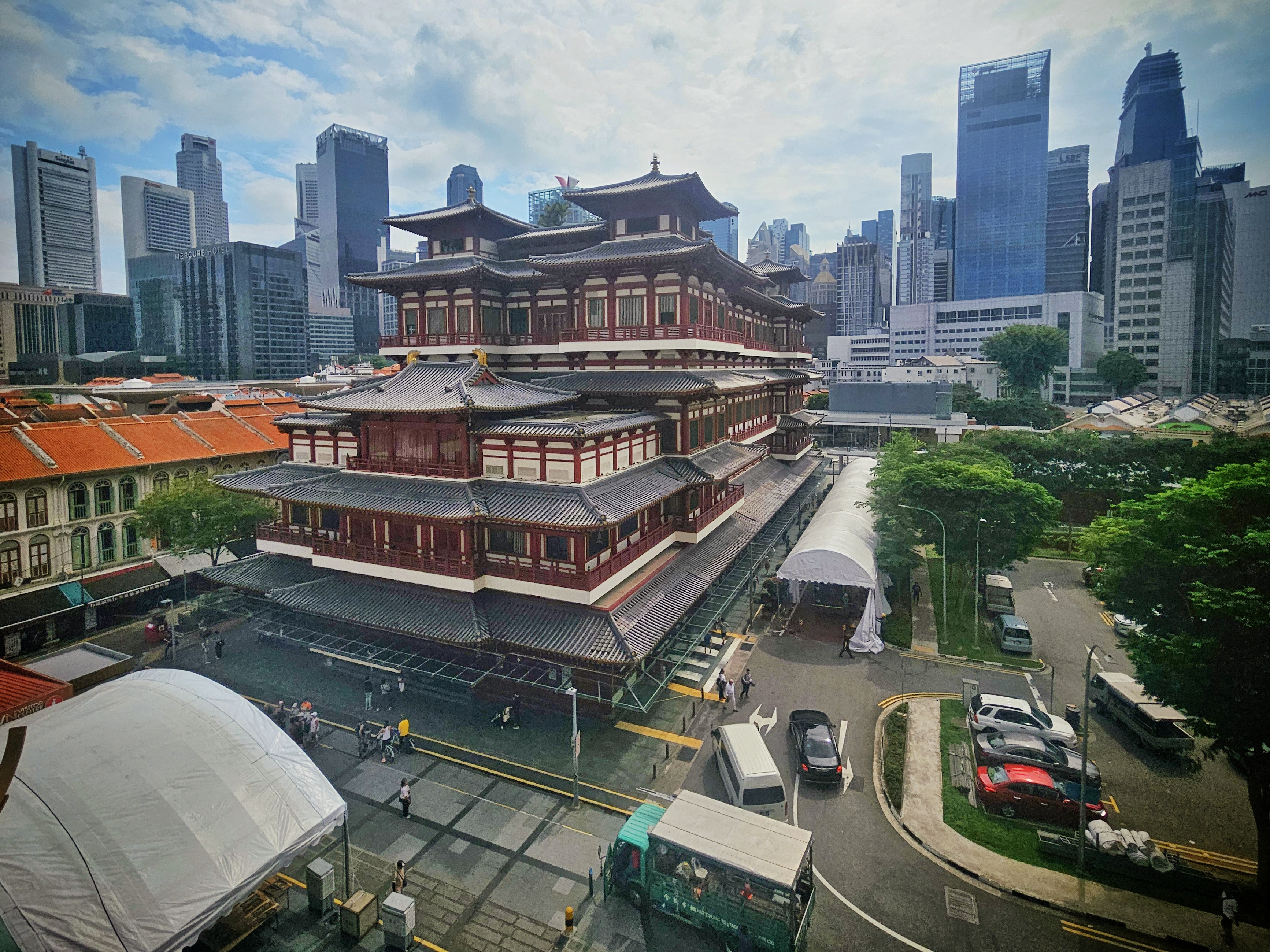
Inside the Temple
The 4th floor features the Sacred Light Hall, where the relic is enshrined. Photography is not allowed in this chamber to preserve its sanctity.
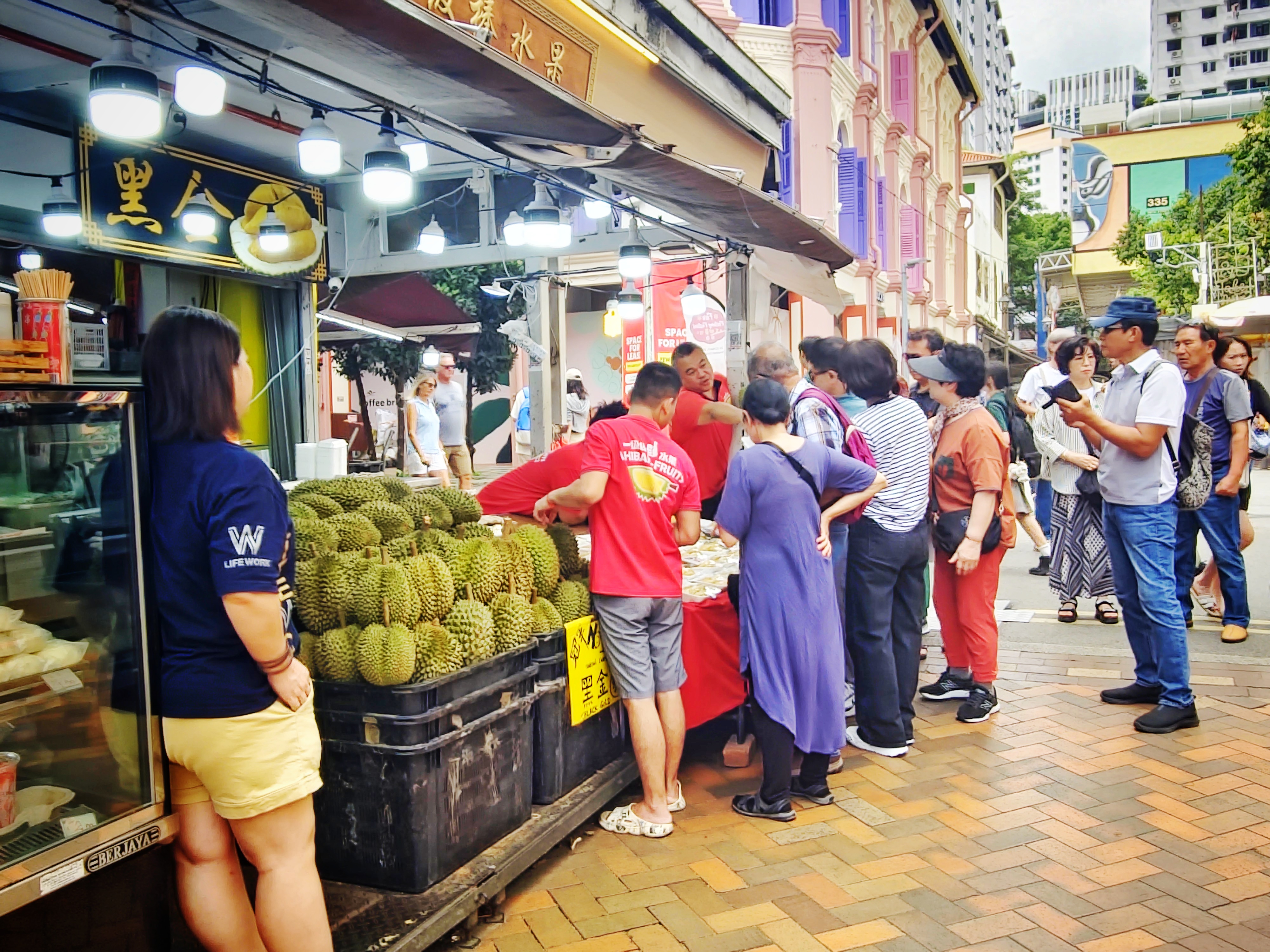
Street Food – Durian Stalls & Local Snacks
Chinatown is also loved for its lively street food. One unique experience is seeing fresh durians being sold and opened on the spot for visitors to try.
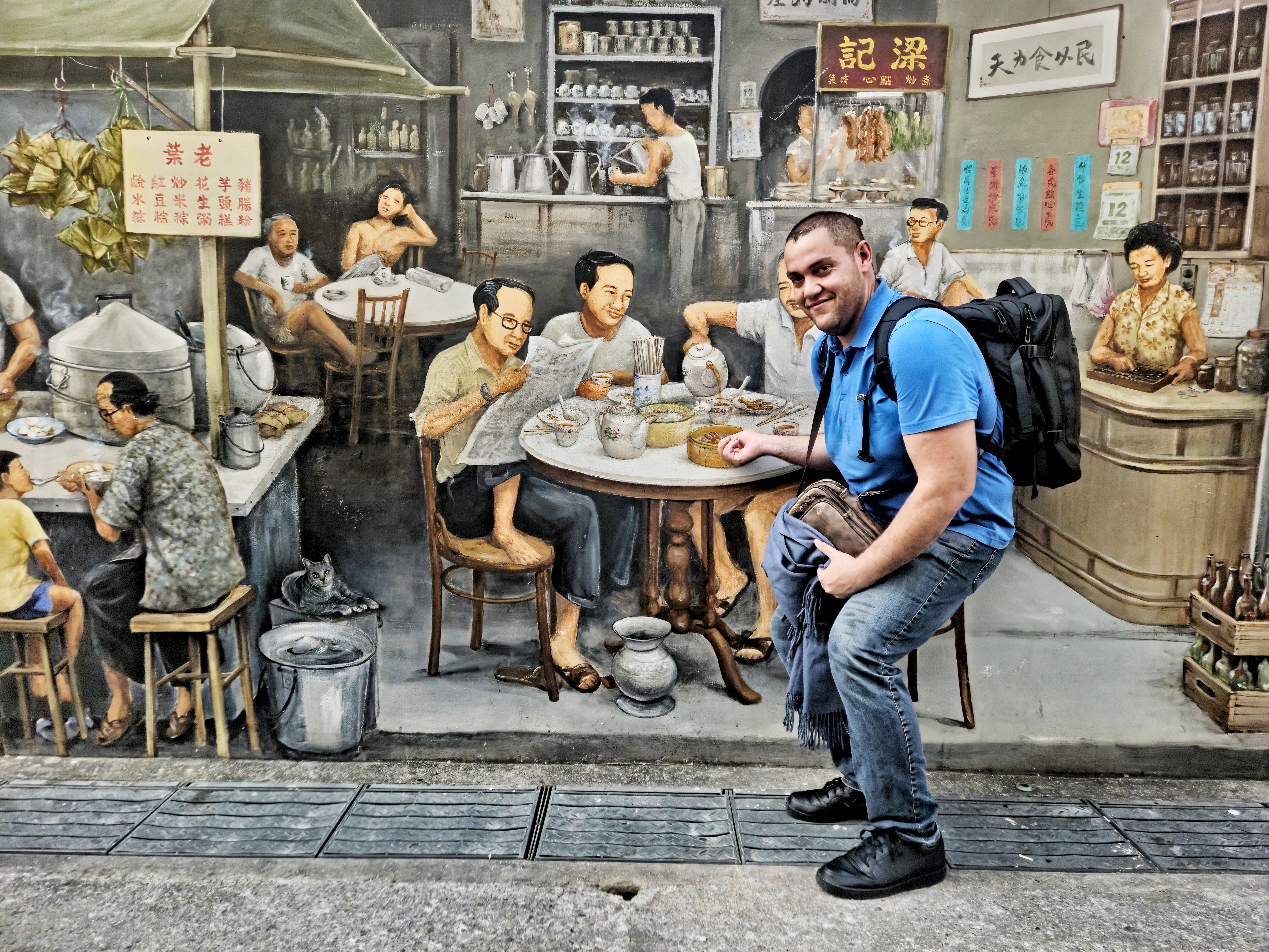
Murals and Street Art in Chinatown
Scattered across the neighbourhood, murals show scenes of daily life from old Singapore, rickshaw pullers, traditional trades and childhood games.
Explore More of Singapore
Chinatown is just one chapter of Singapore’s story. If you enjoyed this guide, you may also like:
- Little India — Colours, Spices & Traditions
- Kampong Gelam — Malay Royalty & Art Street
- Civic District — Where Singapore Began
- Marina Bay — Skyline & Reclaimed Land
- Tiong Bahru — Art Deco & Local Living
Each neighbourhood can be explored on its own or combined into a customised guided tour that fits your time and interests.
Would You Like to Explore Chinatown In Person?
I offer private guided tours by car or on foot, ideal for cruise layovers, short visits, families or travellers who want a personal experience beyond standard sightseeing.
Chat with Khai on WhatsAppYou can also create a combined route, Chinatown with Little India, Kampong Gelam or Marina Bay, all tailored to timings, mobility and interests.
Frequently Asked Questions
▸ What is Chinatown in Singapore known for?
▸ How much time should I spend in Chinatown?
▸ Can I try local food in Chinatown?
▸ What are the must-see places in Chinatown?
▸ Is Chinatown suitable for a guided tour?
▸ Are the temples open to visitors?
▸ Can Chinatown be combined with other districts?
▸ Is Chinatown walkable for seniors or children?
Want To Check Availability Or Customise Your Tour?
 Chat with Khai
 singaporeinaday.com