Welcome to Little India, one of Singapore’s most vibrant and culturally rich neighbourhoods! This bustling enclave is a sensory feast. It is filled with colourful streets, aromatic spices, and intricate temples. The traditions reflect the heart and soul of the Indian community. Whether you’re a history enthusiast, a foodie, or a culture seeker, Little India is a must-visit destination in Singapore.
The Origins of Little India
As its name suggests, Little India is the cultural heart of Singapore’s Indian community, cherished by both locals and visitors. Geographically, it is bordered by Selegie Road and Lavender Street, with Serangoon Road forming the main artery of activity. Interestingly, this stretch of road was once labelled “The road leading across the island.” This was on Lieutenant Jackson’s 1828 map of Singapore.
How Serangoon road Got Its Name
There are two main versions of how Serangoon Road derived its name:
- The Bird Connection
The Malay word Se means “one.” A popular account suggests that the name comes from the Ranggong. This bird is commonly found in the swamps along the Serangoon River. The Malay numeral “satu” (abbreviated to “sa”) was combined with “Ranggong,” forming the name Saranggong, which later evolved into Serangoon. - The Gong Theory
Another version suggests the name came from the Malay phrase di-serang dengan gong (“to surround with gongs”). This refers to the use of gongs to scare away wild animals in the forested areas of Serangoon.
Both accounts provide an intriguing look into the influence of local languages. They reveal how traditions and natural surroundings shaped the identity of this historic road.
Streets with Stories
Several streets in Little India still bear the names of early residents and personalities, reflecting its layered history:
- Dunlop Street and Clive Street – named after European families who settled here in the 1840s.
- Belilios Lane and Belilios Road – named after I.R. Belilios, a Calcutta-born cattle trader who rose to prominence in the mid-19th century.
Walking through these streets is like stepping back in time, where heritage blends seamlessly with modernity.
Cultural Landmarks in Little India
Little India is more than just a historic district. it’s alive with cultural and religious landmarks that continue to thrive today:
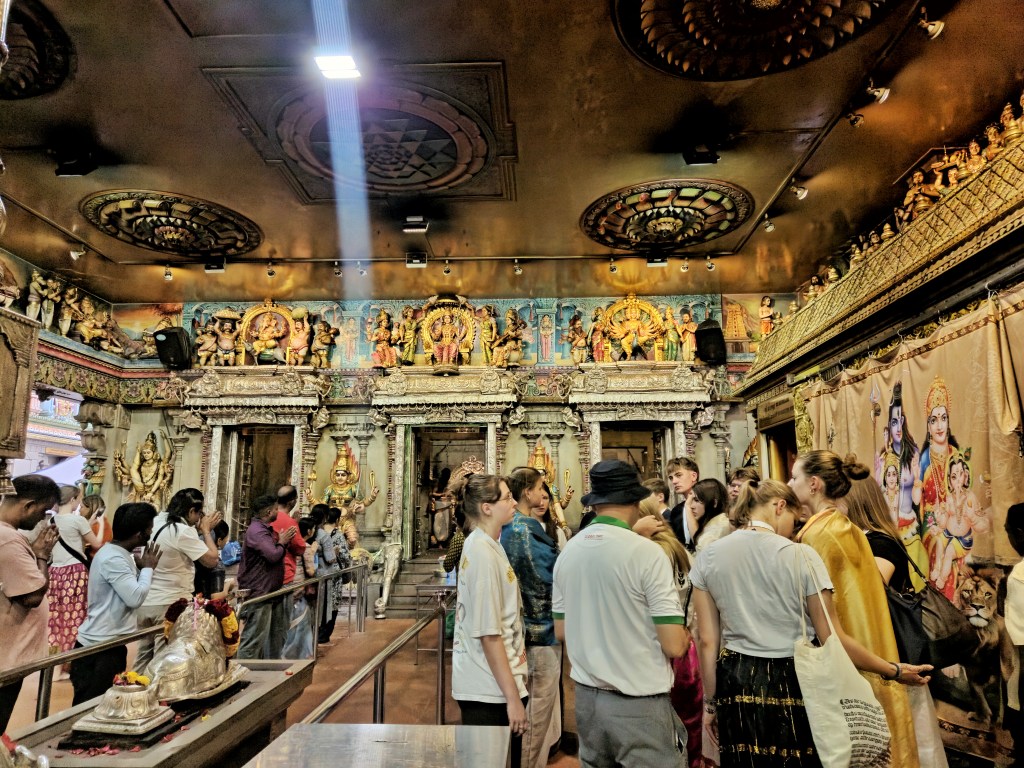
- Sri Veeramakaliamman Temple – one of Singapore’s oldest Hindu temples, dedicated to Goddess Kali.
- Indian Heritage Centre – a museum showcasing the journey, struggles, and contributions of the Indian community in Singapore.
- Mustafa Centre – a 24-hour shopping paradise selling everything under the sun, from electronics to gold jewelry.
- Tekka Centre – a bustling hawker centre and market. You’ll find everything from biryani to fresh flowers for temple offerings.
Each of these attractions reflects the diverse cultural traditions that make Little India such a captivating neighbourhood.
Festivals and Celebrations
One of the best times to visit Little India is during major Indian festivals, when the streets come alive with dazzling lights, intricate decorations, and community celebrations:
- Deepavali (Diwali) – the Festival of Lights, where Serangoon Road is beautifully illuminated with arches and lanterns.
- Thaipusam – a religious procession where devotees carry kavadis (ornate structures) in acts of devotion and endurance.
These events showcase the deep spirituality and vibrant community spirit that define Little India.
Food Adventures in Little India
No visit to Little India is complete without indulging in its culinary delights. You can enjoy banana leaf rice and masala dosai. There are also creamy North Indian curries. The neighbourhood offers a gastronomic journey that rivals the best in Asia. Popular spots include:
- Banana Leaf Apolo – famous for its South Indian fish head curry.
- Komala Vilas – a heritage vegetarian restaurant serving authentic dosai and thali sets.
- Tekka Centre Hawker Stalls – affordable and authentic local Indian street food
Ready to Explore Little India?
Experience Singapore like never before. Our private walking and car tours bring you deep into the heart of Little India. Explore beyond these vibrant streets. Discover hidden gems, savour authentic flavours, and learn stories that most guidebooks leave out.
 singaporeinaday.com