HERITAGE · CULTURE · FLAVOURS
Your Guide to Singapore’s Kampong Gelam
A neighbourhood where royal heritage, street art and spicy flavours come alive.
Kampong Gelam was once known as Singapore’s Arab Muslim Quarter, a gateway for those preparing for the Hajj pilgrimage. Traders sold prayer items, carpets, textiles and perfumes, many of which still line the streets today. Walking here feels like stepping into a blend of Middle Eastern and Southeast Asian heritage.
What Makes Kampong Gelam Unique?
Kampong Gelam is one of Singapore’s most vibrant heritage quarters. Once the royal seat of Malay sultans, it now pulses with colours, culture and character from ornate mosques and historic shophouses to quirky boutiques, street art and aromatic cafés.
Sultan Mosque & Royal History
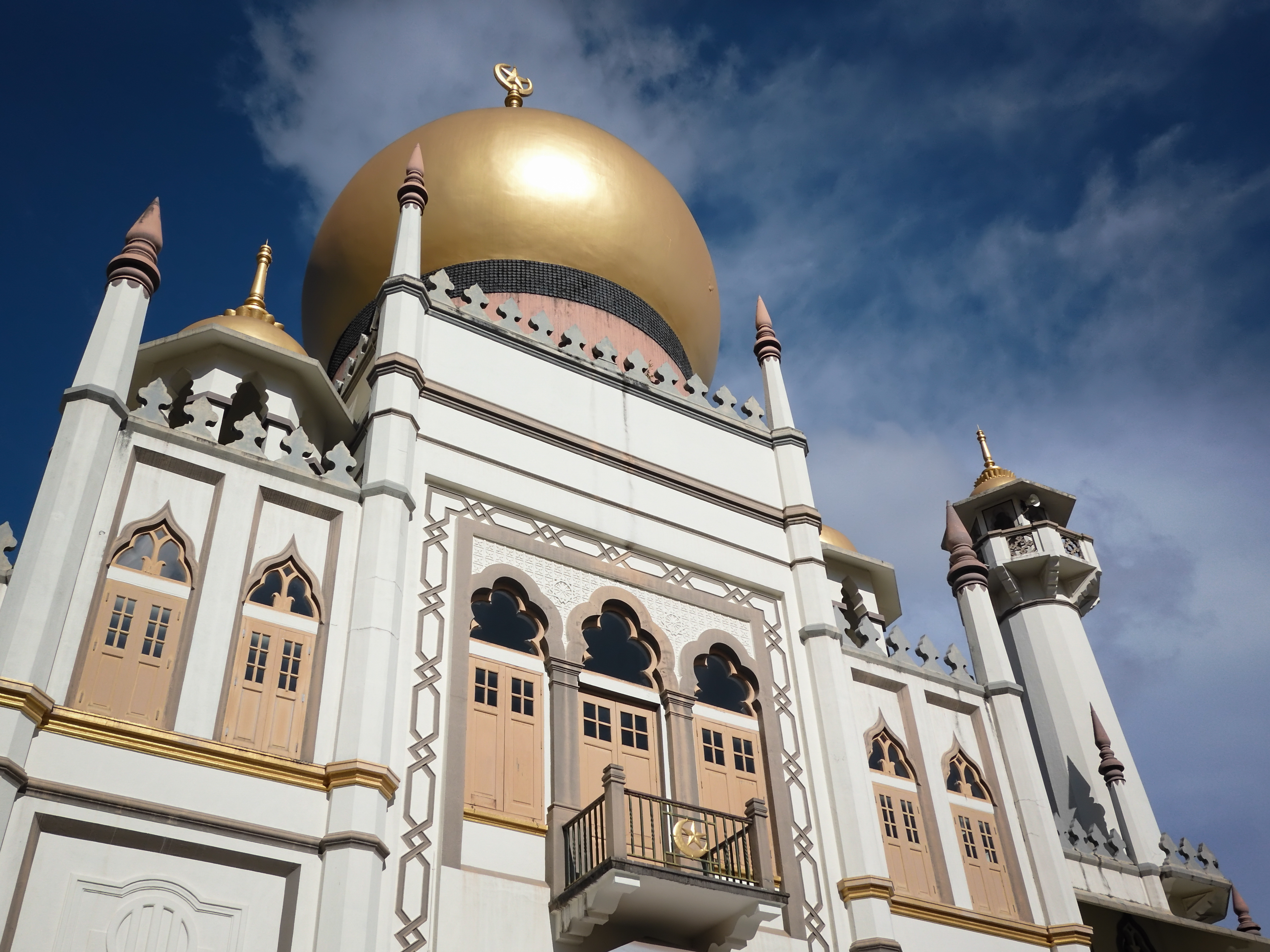
Dominating the skyline with its golden domes, the Sultan Mosque has been the heart of Kampong Gelam for generations. Originally built in the 1820s and rebuilt in the 1920s, it stands as a symbol of the area’s royal Malay heritage and community life.
Symbol of Malay Identity
The mosque’s onion-shaped dome and minarets reflect traditional Islamic architecture, adapted to Singapore’s urban context. It remains a centre for worship, community events and cultural celebrations.
Streets, Shophouses & Street Art
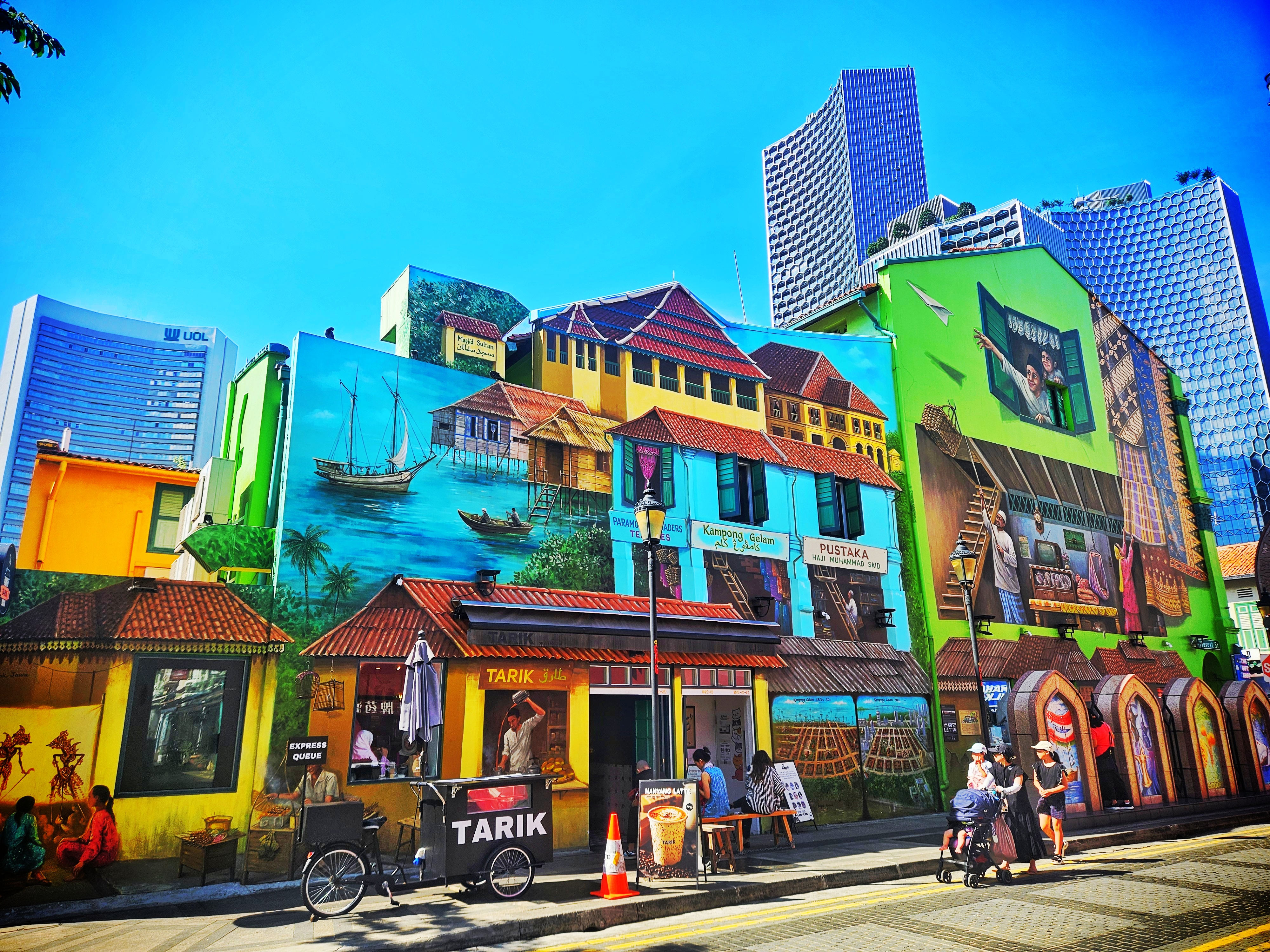
Walk through the narrow streets and you’ll find heritage shophouses, boutiques, vintage shops and bold murals celebrating Malay legends and Singapore’s past. This district blends history with modern cafes, especially along Haji Lane.
Middle Eastern & Malay Flavours
Kampong Gelam’s food scene reflects its trading history, a melting pot of Arab, Malay and Muslim influences. You’ll find nasi padang, Turkish kebabs, baklava, falafel, rose drinks and traditional kopi served alongside modern cafés.
Bussorah Street and Kandahar Street are especially known for halal eateries, carpet shops, perfume stores and spice traders, a living reminder of how cultures once converged here for Hajj, trade and community.

How to Explore Kampong Gelam
A few hours are enough to see the Sultan Mosque, heritage streets and a local food stop. For deeper exploration (street art, shopping, cafés), half a day is ideal. You can also combine Kampong Gelam with Little India or Marina Bay for a full Singapore experience.
Explore More Neighbourhoods
Want to try the best nasi padang, Turkish coffee or rose drinks in Kampong Gelam?
I offer private walking & car tours with food stops, ideal for families, cruise travellers and short visits.
 Chat with Khai
Frequently Asked Questions
▸ Is Kampong Gelam worth visiting?
▸ How long do I need to explore Kampong Gelam?
▸ What is Kampong Gelam known for?
▸ Is Kampong Gelam good for food?
▸ Can Kampong Gelam be combined with other areas?
▸ Is Kampong Gelam family-friendly?
▸ What time is best to visit Kampong Gelam?
Want to explore Kampong Gelam with a local guide? I offer private car & walking tours ideal for cruise layovers, short visits and families.
 singaporeinaday.com