Welcome to the Civic District, the historic heart of Singapore. This area is steeped in rich political and cultural history, home to some of the city’s most iconic landmarks. These buildings not only shaped the skyline. They also played important roles in the nation’s journey from colonial rule to independence. Today, the Civic District is a must-visit for culture lovers. It attracts history buffs and anyone who wants to experience Singapore’s heritage up close.
From the Old Supreme Court to City Hall, each landmark tells a story of resilience. They speak of progress and transformation. Let’s dive into the treasures of this iconic district.
Why Is It Called the Civic District?
The Civic District is among the first areas to be developed in Singapore. This development occurred after Sir Stamford Raffles arrived in 1819. Raffles designated this area on the north bank of the Singapore River for administrative and government purposes. The south bank became a hub for trading companies and warehouses. This careful urban planning gave birth to the Civic District, which became the nucleus of colonial administration and governance. Over the years, it evolved into a symbolic space where Singapore’s most important political milestones took place.
Iconic Landmarks of the Civic District
1. The Old Supreme Court
Sir Shenton Thomas was the Governor of the Straits Settlements. He laid the original foundation stone of the Supreme Court Building on 1 April 1937. At the time, it was the largest foundation stone in Malaya. Beneath it lies a time capsule. The capsule contains six Singaporean newspapers dated 31 March 1937 and Straits Settlements coins. It is sealed until the year 3000.
Today, the Old Supreme Court is part of the National Gallery Singapore. This award-winning museum showcases the world’s largest public collection of Singaporean and Southeast Asian art.
2. City Hall
City Hall was completed in 1929 and has witnessed pivotal moments in Singapore’s history. It was from the steps of City Hall that the late Mr. Lee Kuan Yew, Singapore’s first Prime Minister, declared self-government in 1959 and later independence in 1965. Now it is part of the National Gallery Singapore. It stands alongside the Old Supreme Court. City Hall continues to be a symbol of Singapore’s nation-building journey.
3. The Padang
The Padang (Malay for “field”) has been a gathering ground for more than 180 years. It was once used for cricket matches and parades. It has also been the site of key national celebrations. An example is the declaration of Singapore’s independence. Today, the Padang remains a recreational space. It is also used for ceremonial events. It is surrounded by architectural gems like the Victoria Theatre & Concert Hall and the Asian Civilisations Museum.
Things to Do in the Civic District
- Visit the National Gallery Singapore. Explore over 8,000 artworks from Singapore and Southeast Asia. These artworks are housed in the beautifully restored Old Supreme Court and City Hall.
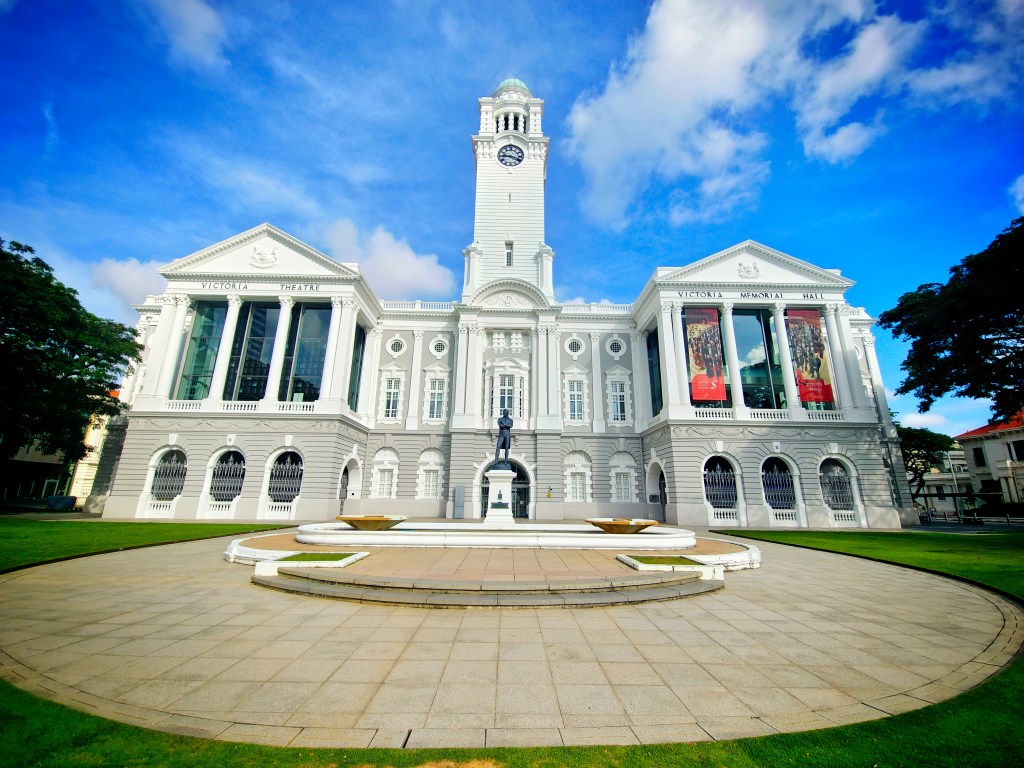
- Admire the Victoria Theatre & Concert Hall – Catch a live performance or simply admire this neoclassical architectural gem.
- ️ Walk along the Singapore River. Trace the footsteps of early settlers while enjoying riverside views. Enjoy cafes and restored warehouses.
- Explore the Asian Civilisations Museum – Discover stories of Singapore’s diverse roots through artifacts, exhibitions, and interactive displays.
- Stroll at the Padang and Esplanade Park. It is perfect for a leisurely evening walk. You can enjoy views of Marina Bay and the Singapore skyline.
Festivals, Events & Formula 1
The Civic District is not just about history. it’s also a vibrant hub for festivals, parades, and cultural celebrations. Some notable events include:
- National Day Parade (August): Celebrates Singapore’s independence with military displays, performances, and fireworks at the Padang or Marina Bay.
- New Year’s Eve Celebrations (December 31): The Padang and surrounding areas are popular spots. They are great for countdown festivities and fireworks over Marina Bay.
- i Light Singapore (February–March): Asia’s leading sustainable light art festival transforms Civic District landmarks into glowing masterpieces.
Why Visit the Civic District?
The Civic District is more than just a collection of old buildings. It is the birthplace of modern Singapore’s identity. From colonial administration to independence and now a thriving cultural hub, it is the perfect blend of past and present.
Whether you’re interested in art or history, the Civic District offers a meaningful experience. It connects you to Singapore’s soul through politics or architecture.
FAQs About the Civic District
- 1. What is the Civic District known for?
It is Singapore’s historic and political core, featuring landmarks like the Old Supreme Court, City Hall, and the Padang. - 2. Can I attend festivals or Formula 1 events here?
Yes! Key events include the National Day Parade, i Light Singapore, Singapore Night Festival, and the Singapore Grand Prix. - 3. Is it free to visit the Civic District?
Walking around the district is free, but museums, festivals, and F1 events require tickets. - 4. How long should I spend here?
2–4 hours for highlights; a full day if including museums, river walks, and events.
- 5. What is the best time to visit?
Late afternoon to evening is ideal for cooler weather, festival experiences, and the spectacular F1 night race.
Ready to Explore Singapore’s Civic District?
The Civic District is a must-visit for history, culture, festivals, and even Formula 1 excitement. Slow down, take a walk, and experience the blend of heritage, art, and modern thrill.
also Read:
- discover 12 Free things To Do in Singapore
- discover singapore: Custom Tours for Every Culture Enthusiast
- Local Insights: Experience Authentic Singapore Culture
- If you enjoyed little civic district, read tiong bahru Stories
 singaporeinaday.com